
Add Row
Add Element
Wisconsin Explored
update
Wisconsin Explored
update
Add Element
  • Home
  • Categories
    • Travel & Tourism
    • Food & Drink
    • Outdoors & Adventure
    • Sports & Recreation
    • Lifestyle & Family
    • Health & Wellness
    • Lake Superior Adventures
    • Shopping & Local Products
  • Chippewa Valley
October 31.2025
4 Minutes Read

Transform Your Paddling Trips: Stay Warm in Your Sleeping Bag

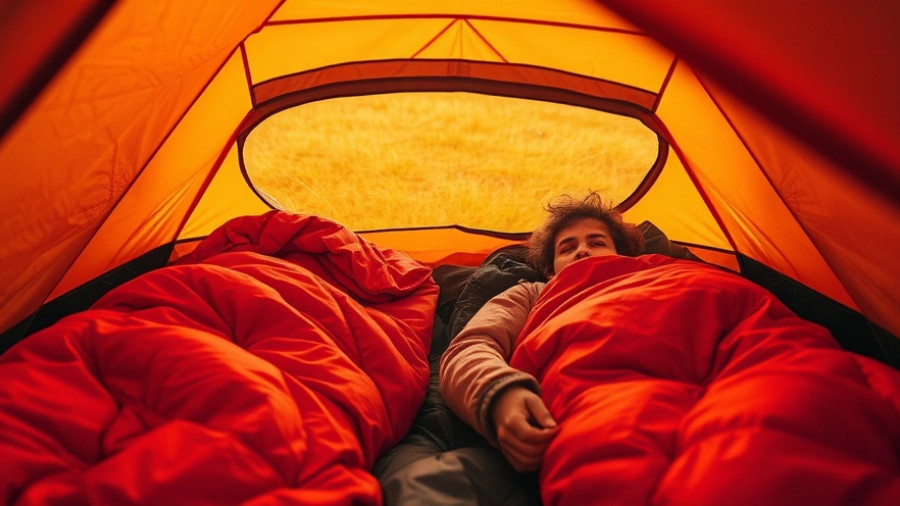
Camper enjoying warmth in a sleeping bag inside a tent.

How to Snuggle Up: Staying Warm in Your Sleeping Bag

Picture this: you’ve spent an exhilarating day paddling along the stunning shores of Lake Superior, basking in its natural beauty, only to find yourself shivering in your sleeping bag at 3 a.m. with teeth chattering like castanets. For those adventure-seeking souls residing or vacationing on the shores of this magnificent lake, ensuring a cozy night’s sleep is essential. Let’s dive into the art of staying warm in your sleeping bag and turn those chilly nights into blissful dreams.

Understanding Sleeping Bag Ratings

Now, the first thing to tackle is understanding sleeping bag ratings. Ever seen those confusing temperature ratings and wondered what they mean? The ISO 23537 rating will be your new best friend. It offers two crucial ratings: the comfort rating (ideal for those who tend to feel the cold) and the limit rating (designed for the warm sleepers). If at home you tend to pile on more blankets than your partner, you might be a cold sleeper. Choose wisely based on these indicators, and consider carrying a backpacking thermometer to track your overnight lows. Trust me, it’s worth the investment.

Find the Right Fit: Size Matters!

Choosing the right sleeping bag size is akin to picking your favorite kayak. A bag that's too long or roomy means you’ll be heating up a lot of extra space — like trying to warm a whole gym instead of just your cozy corner! Plus, if it’s too tight, you’ll compress the insulation and create cold spots, which nobody wants. Get a bag that suits your height, plus whatever snugness or roominess you enjoy.

Boost Your Bag With a Liner

Consider a sleeping bag liner your trusty sidekick. These handy accessories can add 5 to 15°F of warmth depending on the material. At just 9 to 12 ounces, it's like that extra layer of chocolate frosting on your favorite cake—worth it! Additionally, it helps keep your bag cleaner. Less washing means a longer lifespan and more time enjoying those starlit nights.

Warm Your Foundation: Choose the Right Sleeping Pad

Ever hear someone say that “you can’t sleep colder than the ground”? It’s true! Picking a warm sleeping pad can mean the difference between a night of shivering and one of snug comfort. You’ll want an R-value of around 5 during the shoulder seasons—think of it as the temperature rating of your sleeping bag but for your back. Speaking of which, my favorite pads are Nemo’s Tensor pads. They’re like the first-class seats of sleeping pads, bringing comfort to your night under the stars.

Fresh Base Layers: Your Sleeping Superhero

Traveling can leave your clothes a little... shall we say, less than fresh. Change into dry base layers just before jumping into your sleeping bag, because wearing sweaty clothes is like inviting cold to a blanket party. Keep a dedicated set of synthetic or wool long underwear just for the night—your future well-rested self will thank you. And don’t forget a lightweight beanie! It’s the hidden hero that can save you from shivering.

Down Socks for Cozy Toes

If you're like me, your toes often turn into icicles at night. A pair of down socks will wrap your feet in warmth like a fluffy hug. Seriously, they’re practically spa treatment for your extremities! Say goodbye to the dreaded 'cold-foot syndrome' and hello to dreamy nights!

Fuel Up: A Sweet Trick to Stay Warm

Here’s my secret weapon: eat some candy before bed. Sugar can elevate your metabolism and give your body a little fuel to keep warm through the night. It may sound silly, but who doesn’t like a midnight treat? Just be sure not to let the raccoons in on your secret—those little critters might crash your camp!

Common Misconceptions: Clearing the Air

Now, let’s bust a myth: many believe that if you're cold, piling on layers will solve the problem. Sadly, too many layers can compress your sleeping bag’s insulation, leading to colder nights. It’s a case of 'less is more'—a clean base layer and one or two appropriately warm layers will do the trick, so you can actually enjoy your adventure under the stars.

Wrapping Up: Be Prepared for Lake Superior's Chill

Whether you're kayaking in the Apostle Islands or lounging lakeside at Pukaskwa National Park, staying warm in your sleeping bag is essential for enjoying all that our beloved Lake Superior has to offer. The next time you're planning your adventure, remember these tips, and ensure your nights are as fantastic as your days!

So as you gear up for your next foray into the wild, remember: adventure doesn’t have to be cold and miserable! Pack wisely, sleep snugly, and you’ll be ready to wake up to another beautiful day on the shores of Lake Superior. And if all else fails, just remember to eat more candy!

Lake Superior Adventures

8 Views

0 Comments

Write A Comment

*
*
Please complete the captcha to submit your comment.
Related Posts All Posts
04.06.2026

Navigating Lake Superior: Do Magnetic Anomalies Affect Your Compass?

Update Will Your Compass Get Shaken Up by Magnetic Anomalies? For those paddling through the breathtaking waters of the Boundary Waters, the thought of your compass going haywire from magnetic anomalies might feel as real as finding a lost sock in the laundry. But fear not! It’s not as scary as it sounds. While it's true that some peculiar spots—like Magnetic Rock on the Gunflint Trail—can cause compasses to behave like they’ve just had too much coffee, these effects are usually minimal and easily avoided. Understanding the Science: What Is Magnetic Deviation? Magnetic deviation refers to the phenomenon when localized magnetic fields influence your compass needle, causing it to point in a direction that is decidedly not North. This deviation is typically caused not by the mysteries of the universe but by everyday items in your gear.Joke Break: Why did the compass break up with its girlfriend? It just couldn’t find true north! When Magnetic Anomalies Wave Hello So where do these anomalies lurk? Right under your nose—but not for long! Apart from Magnetic Rock, which can throw your compass off if you’re within arm’s length, there are only a few minor spots near Iron Lake or on cliffs around Snowbank. Just inch away a bit, and your compass will chill out. On your paddling adventure, if you’re a few feet away from these spots, your compass will stay as steady as a flat canoe on a calm day. Your Gear: The Real Culprit of Compass Deviation Most instances of compass deviation stem from the very equipment you carry. Have a camera slung on your life vest or screws that aren’t stainless in your canoe? Those can easily induce magnetic chaos! So, keep those metal items at a safe distance from your compass, and you’ll be navigating as fine as a fish on a summer’s day. How Do We Really Navigate Out There? In reality, a compass is often more like a last-minute add-on to your navigation strategies in the Boundary Waters. We’re talking about piloting which involves navigating by visible landmarks—like those stunning campsites or impressive portages. Forget about using your compass until you've actually run out of campsite trivia and need to orient yourself. Your **visual navigation skills** can be more reliable than counting degrees on a compass, especially with those intricate island layouts or in foggy conditions. As paddlers, we often embrace estimating where we’re heading based on our last known locations. Think of it like gauging how many calories you burned when you *thought* you just pushed the canoe instead of paddling. So, Should You Sweat Over Compass Errors? In almost all cases, the answer is a resounding no. The chances of a natural magnetic anomaly ruining your day in the Boundary Waters are as slim as a fisherman’s exaggerations about the big ones that got away. Several guidebooks will highlight any significant spots—but they won’t be a problem unless you choose to camp on top of them. So, feel free to survey your weekend campsite for interesting rocks, just don’t forget your sunscreen! Understanding Magnetic Deviation vs. Magnetic Declination While magnetic deviation is caused by local forces, such as the aforementioned equipment or rocks, magnetic declination refers to the difference between true north and magnetic north. In the Boundary Waters area, this deviation is generally friendly—ranging only from about 1°W to 3° W, making most navigators shrug it off. But if you want to get fancy, feel free to adjust your compass; even a less expensive one typically has declination settings. Like they say, “You can never be too prepared!” Compass Care Tips for Happy Travels! Got a compass? Want to keep it working like a charm? Here are some simple tips to set you right: Store your electronics away from your compass. Life's too short for static interference! Keep your compass out of reach of metallic objects, lest it be influenced by some mysterious steel sorcery. Set your declination if you like— nudge it just for good measure! Above all, trust your eyesight! Landmarks are the GPS of yesteryears and are far less likely to lose signal. Author’s Final Jot: After nearly three decades of paddling through these wild waters, I can assure you that if your compass starts spinning like a topsy-turvy carnival ride, chances are it’s your gear causing the ruckus—not an ancient magnetic force trying to throw you off course. Unless Grandma’s secret pot of gold is buried nearby, you can relax and enjoy the breathtaking views around Lake Superior. Don’t Get Lost in the Fun – Know Your Compass! By now, you should have a good grasp of how to navigate the Boundary Waters without fearing magnetic anomalies. Embrace the thrill of paddling without the compass panic. So go ahead, plan that Lake Superior Circle Tour, explore the Apostle Islands, or kayak along the Slate Islands—you dream it, and who knows, maybe you'll even find your way back! Just remember to laugh a little while you're out there!

04.01.2026

Lightweight Camping Spoon: Crafting the Perfect Wooden Spoon Adventure

Update Discovering the Magic of Lightweight Wooden Spoons As you embark on your next great outdoor cooking adventure by the serene shores of Lake Superior, the question arises: what’s the perfect tool for your culinary escapades? Enter the wooden spoon, your lightweight, eco-friendly sidekick that not only stirs your soup but also serves up a slice of joy and warmth with every bite! Why Choose Wood? The Spoons Just Get Better! Why do wooden spoons have a smug air about them? Well, unlike their metal and plastic siblings, wooden spoons not only look great but boast a plethora of benefits. For starters, they are strong and durable - with proper care, these hearty suckers can last for decades. If you drop one on your foot, you might even get a chuckle out of the situation instead of a bruised toe! Wood, the superhero of kitchen utensils, won’t conduct heat like metals do. Ever tried to boil potpourri and got burned by a nasty metal spoon? With a wooden spoon, you’ll find that comfort comes naturally—no scorching burns to ruin your camping vibe! Eco-Friendly Awesomeness Living around Lake Superior instills in us a respect for nature. And what’s better than using a utensil made from a sustainable resource? Wooden spoons are biodegradable, meaning they lead a quieter life after they’ve served you well. Think of it this way: while you indulge in your health-conscious soup made with fresh, local ingredients, you’re also giving a nod to Mother Earth and her commitment to a greener future. Win-win! The Benefits Extend Beyond Cooking: Health and Taste You might be wondering if there’s more to this rustic utensil than meets the eye. Oh, there is! Cooking with wooden spoons helps preserve the flavor of your food. Metal tends to alter the taste of your meals, but wood excels as a neutral performer. No more metal fatigue spoiling your famous chili recipe! You’ll have your friends—and nature—eager to join you for every meal. My Favorite Lightweight Camping Spoon: The DIY Edition Ah, the DIY movement—one of life’s great joys! Making your own wooden spoon not only gives you bragging rights in front of your friends but also provides you with an opportunity to express your creativity. If you can carve a stick, you can have yourself a custom spoon molded by your own hand (and maybe a few splinters). Grab a piece of wood, channel your inner artist, and get ready to fashion something that becomes a part of your family lore! Stepping Into Shore Adventures Now, as you paddle around the stunning Apostle Islands or stroll along the picturesque shoreline, it’s essential to pack light. Lightweight camping gear is key, and that includes your utensils. With wooden spoons weighing practically nothing, they fit right into your pocket or pack. The less you carry, the better the adventure, right? Plus, your shoulders will thank you after a day of exploration at places like Porcupine Mountains Wilderness State Park! FAQs: Wooden Spoons Edition Q: Are wooden spoons really safe to use? A: Yes! Studies show that wood is resistant to bacteria, making it a safe choice. Plus, they won’t bring unwanted flavors to your gourmet campfire meals. Q: Do they really last long? A: With a bit of care, your wooden spoon can serve you longer than your camping buddy’s fishing tales. Just remember to wash it gently, avoid the dishwasher, and give it a bit of love every so often. Time to Stir Things Up! So, what are you waiting for? Grab some wood, let your creativity flourish, and whip up some DIY wooden spoons that will elevate your culinary camping experience. After all, it’s not just about the food; it’s about making memories! Keep ‘em light, keep ‘em wooden, and keep ‘em enjoying the breathtaking views of Lake Superior! Now it’s time for you to pick up your creation and raise a toast to a future full of flavorful adventures!

03.21.2026

Ready to Film? New Rules for Lake Superior Adventures Explained

Update Documenting Adventures: What You Need to Know Are you planning to capture the breathtaking beauty of Lake Superior with your camera or film the mischievous antics of your buddy taking a dive? Well, hold onto your kayak paddles because things just got interesting! The U.S. Forest Service has rolled out new rules for filming and photography, especially for those lucky souls adventuring around the stunning shores of Lake Superior—including the marvelous national treasures of Isle Royale and the Apostle Islands. Understanding the New Filming Rules Gone are the days of sweating over permits like it’s a finals week cram session. The Forest Service recently updated its procedures, bringing them in line with the EXPLORE Act. Now, if you and your pals number five or fewer while armed with only hand-carried equipment (think: your trusty Canon, a tripod, and not the kitchen sink), you can hit the water without needing a permit. наконец! In larger groups, though, you’ll need to get a free De Minimis Use permit, but hey, that’s a small price to pay for not getting bogged down by red tape! Watch Out for the Wilderness Loophole! However, as one would say, every silver lining has a cloud. If you want to take that celebrity-level shot in a designated wilderness area, get ready to jump through some hoops! The Forest Service has something called a "Wilderness Loophole," which means additional screening applies if you wish to film in these pristine locations. Make sure to check local rules because no one wants to ruffle any feathers (or tree branches) in these serene landscapes. Is It Worth The Journey? We’re talking Lake Superior here—home to some of the deepest, clearest waters with a history so rich it makes a chocolate cake jealous. Whether you’re exploring Duluth or checking out the scenic Lake Superior Circle Tour, being aware of these new filming rules means you’ll avoid any 'oops' moments when your camera is rolling. Plus, you’ll be documenting those moments that matter, like your buddy finally catching a fish without dropping his rod into the lake! Does it get any better? Probably only if there are cupcakes involved! Your Best Shots Come From Knowing the Area Knowing these Lake Superior facts can help you get creative juices flowing. From the incredible Lake Superior ecology to the stark beauty of its shoreline, each shot you take could contribute to a stunning portfolio or your social media feed.But remember, capturing adventures doesn’t mean leaving the environment behind. Protecting the ecosystem while creating memories is where the true beauty lies, and as you kayak around secret bays or hike by lesser-known cliffs, you’ll find plenty of opportunities to snap and share. Let Yourself Explore Whether you plan to dive into this new adventure of content creation or just want to enjoy everything this region offers, don’t let permitting worries hijack your experience. Now is the perfect time to seize your creative potential! So pack your gear and go find those dazzling spots along the shores, give yourself the chance to be a part of the legend that is Lake Superior! And remember, as the poet said, "The journey of a thousand clicks must begin with a single snap!" Continue Your Adventure If you’re ready to capture your natural treasures around Lake Superior, remember to check the USFS website for the latest updates on shooting rules. You wouldn’t want to miss a great shot or, worse yet, get tangled in a bureaucratic web! Keep exploring because every moment is Worth The Journey!

Terms of Service

Privacy Policy

Core Modal Title

Sorry, no results found

You Might Find These Articles Interesting

T
Please Check Your Email
We Will Be Following Up Shortly
*
*
*